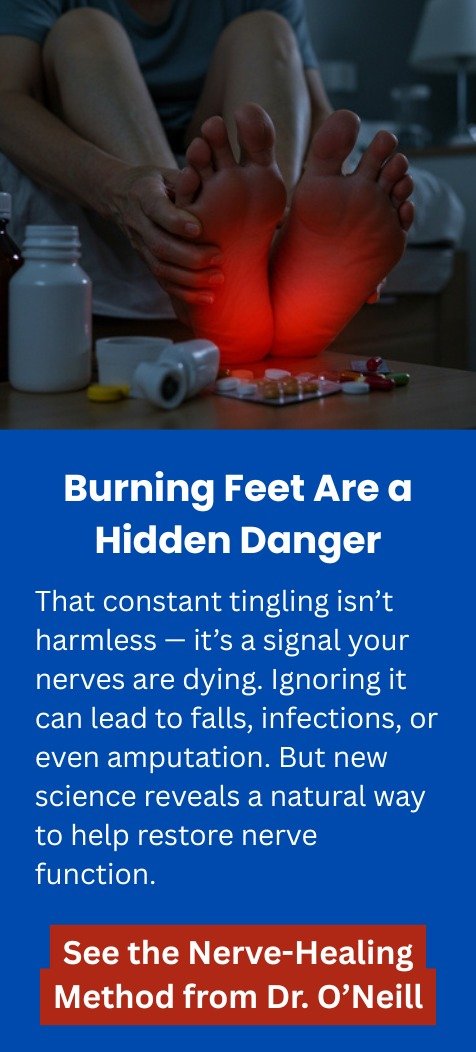
The Alarming Symptoms of Nerve Breakdown
These aren't just small discomforts. Burning feet, tingling hands, or stabbing pain are early signs of a hidden process silently destroying your nerves from the inside. Ignoring them can turn temporary pain into permanent damage.
If you notice 3 or more of these symptoms, pay close attention:
- Burning, tingling, or numbness in feet or hands
- Stabbing pain or electric shock sensations in legs
- Weakness, cramps, or trouble walking
- Cold feet or hands even in warm temperatures
- Wounds or sores that take too long to heal
These symptoms are warnings — not random aches. They mean your nerves are crying for help before the damage becomes irreversible.
It's Not Age. It's Not Diabetes or Chemo. It's Something Hidden Inside Your Nerves.
You've probably been told your neuropathy comes from diabetes, chemo, or getting older. But researchers have now proven those are only surface triggers. The true cause lies in a hidden process that blocks your nerves from healing themselves.
This process prevents vital nutrients from reaching the nerves, starving them of oxygen and energy. Instead of repairing, the fibers break down — sending mixed pain signals and leaving parts of your body numb or dead to sensation.
That's why creams, pills, and injections fail. They mask the pain while the destruction continues underneath, turning temporary inconvenience into permanent disability.
The shocking truth? No — it's not your age or your diabetes. It's this hidden biochemical breakdown that no doctor ever told you about. And until you understand what's really causing it, the damage will keep advancing every day.
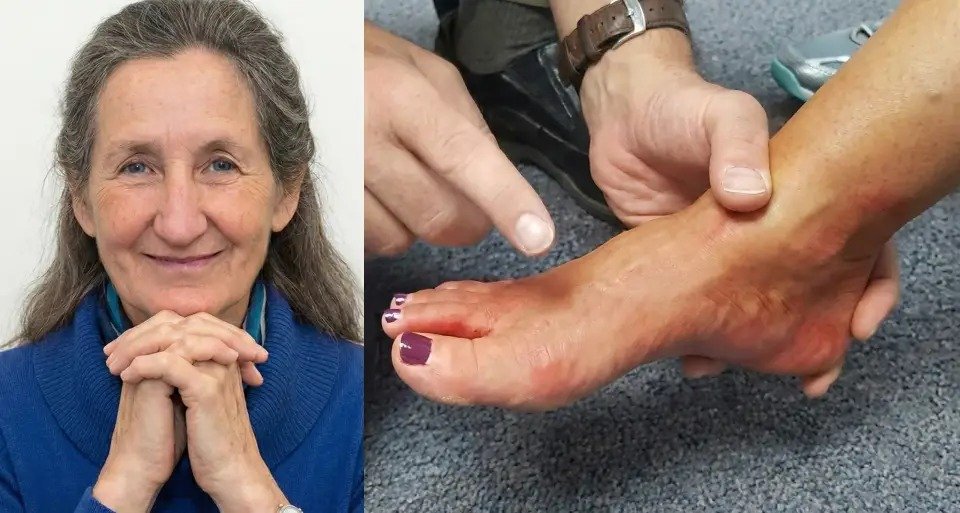
In the video below, discover the simple natural treatment Dr. Barbara O'Neill says helps support healthy nerves and restore their natural function.
Watch: Fight the Root Cause of Nerve PainWhen a Hidden Nutritional Deficiency Led to a Breakthrough in Nerve Healing
Their doctors had tried every conventional approach — medications, nerve blockers, injections — but nothing worked. They described it as walking on fire, the same agony I'd seen in thousands of my own patients here on Earth.
That's when I came across something extraordinary. A team of researchers inside a classified medical project had developed a natural treatment to regenerate nerve cells damaged by cosmic radiation.
As soon as I reviewed the data, I recognized the implications. It was the same underlying mechanism I'd been studying for years: a biochemical breakdown that blocks the body's ability to repair its nerves — and this natural formula was reversing that failure.
For the first time, I wasn't just treating symptoms — I was witnessing healing. It was the moment I realized neuropathy wasn't a life sentence. The body can recover if you remove what's blocking it — and this natural formula was doing exactly that.
🔬 The Root Cause: Vitamin B12 Deficiency & Myelin Breakdown
After three years of government-supported research and over 2,100 clinical tests, the finding was clear: the true root cause of neuropathy is a severe deficiency of Vitamin B12 — specifically the body's inability to absorb and utilize it properly.
Without adequate B12, the myelin sheath — the protective coating around every nerve fiber — begins to deteriorate. Exposed nerve fibers fire erratically, producing the burning, tingling, and stabbing sensations millions of Americans live with daily.
Chemical medications and standard diets can only temporarily alleviate symptoms, creating the illusion of relief. To fully eliminate neuropathy, the body must restore its ability to properly absorb B12 and regenerate myelin — something conventional treatments never address.
The discovery that began in space is now changing lives right here on Earth. If you've been living with nerve pain, you need to hear this. Click the button below for Dr. O'Neill's full explanation on how this natural discovery is helping people finally heal their nerves.
Watch: See Dr. O'Neill's Nerve Healing DiscoveryHow These Neuropathy Patients Stopped the Amputation Cascade
Thousands have already discovered what their doctors never told them about nerve regeneration — and their lives have completely changed. Here are just three of their stories.

I'd been on Gabapentin for four years — it made me so foggy I couldn't remember my grandkids' names. My doctors said to "learn to live with it," but the burning in my feet kept me up every night. My A1C was under control, but the neuropathy kept getting worse. Two weeks into Dr. Barbara O'Neill's protocol, I slept through the night for the first time in years. Six weeks in, I could feel the carpet under my feet again. My podiatrist was shocked at my latest nerve test.

I beat colon cancer, but the chemo left me with burning hands and feet that wouldn't quit. My oncologist said it might be permanent — just another side effect I'd have to accept. I couldn't hold a coffee cup without dropping it. Couldn't feel my car's gas pedal. I was terrified of losing my independence after fighting so hard to survive. Within three weeks on this natural protocol, the electric shocks stopped. Eight weeks in, I'm back to woodworking in my garage. The tingling is 90% gone.

Four different doctors, two years of tests, and nobody could tell me why my feet were on fire. They called it "idiopathic neuropathy" which basically means we don't know why. Medicine made me gain 40 pounds in six months and I still couldn't walk my dog around the block. My husband found Barbara O'Neill's presentation online and I decided to try it, desperate. Within a month, I walked two miles without pain. The numbness that terrified me — gone. I got my life back without another prescription.
They all watched the same clinical presentation. They all learned what was really causing their nerve damage. And they all stopped the cascade before it reached amputation. Don't spend another day watching your nerves deteriorate.
Tingling and Numbness Are the First Warning Signs
What begins as a faint burning in your feet or hands can quickly progress into stabbing pain, muscle weakness, and irreversible nerve damage.
The simple at-home method discovered by Dr. Barbara O'Neill may be the key to stopping this hidden process before it takes control of your life.
"In just about 17 hours, this method can begin to reduce pain and symptoms like numbness, tingling, and muscle weakness. Within three weeks, it fully restores the production of Vitamin B12 and other vital nutrients — ensuring the nerve damage never returns." — Dr. Barbara O'Neill
This presentation is currently available at no cost — but due to pressure from pharmaceutical distributors and limited access through the government program, it may be taken down at any time.